St Brigid and Candlemas
The first two days of February sit together. One is St Brigid’s feast. The next is Candlemas, when candles are blessed.
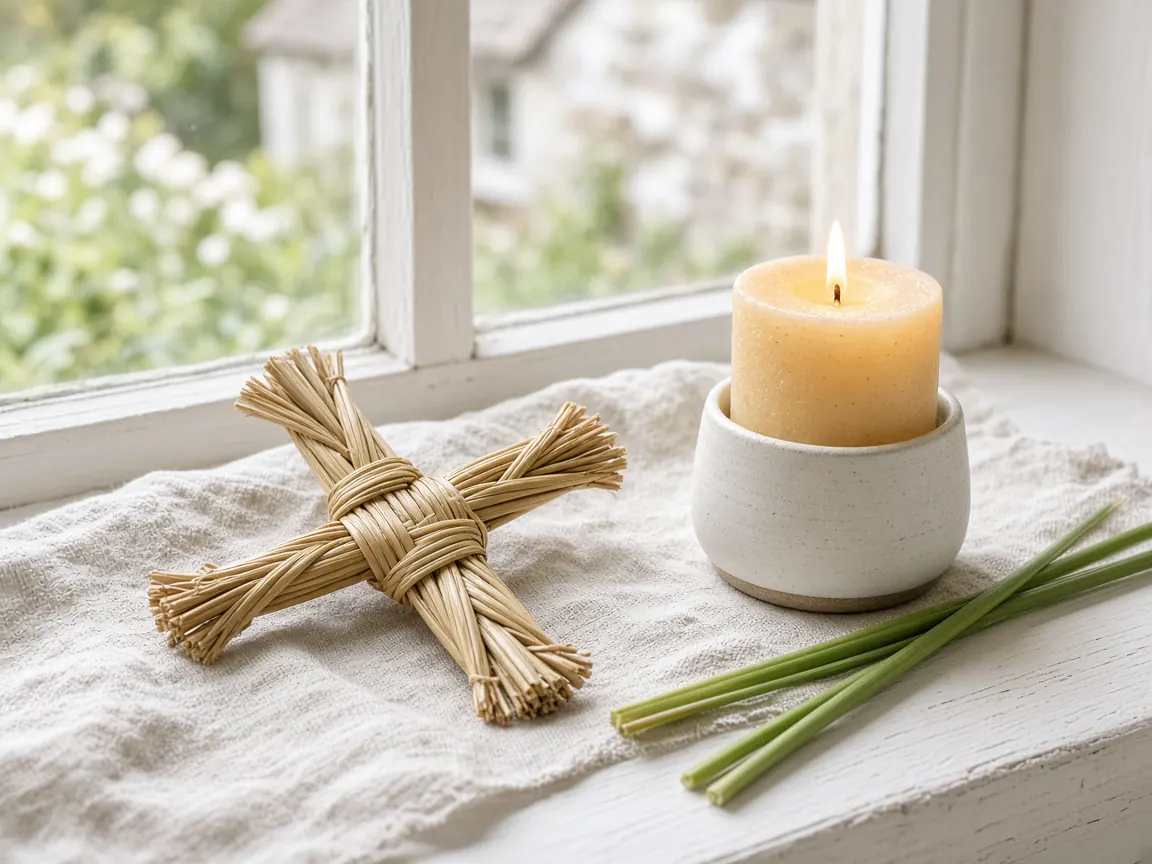
St Brigid’s Day, 1 February
St Brigid of Kildare is one of Ireland’s patron saints. Her day falls at the start of February, the turn towards spring. The custom most people still make with their hands is the Brigid’s cross, woven usually from rushes and put up in the house or the byre for the year.
Light is part of how she is remembered. A fire was kept at Kildare in her honour, and the hearth sits near the centre of her story. On the eve of her feast many people light a candle.
In the Republic of Ireland there is a public holiday at the start of February for St Brigid. The feast day itself is 1 February. It is not a bank holiday in Northern Ireland or in Britain.
Candlemas, 2 February
Candlemas is the Feast of the Presentation of the Lord, forty days after Christmas. Candles are blessed in church that day. The English name comes from that blessing. People took the blessed candles home and kept them for the year.
The day was also read as a weather mark. A traditional rhyme puts it this way:
If Candlemas day be fair and bright, winter will have another flight. If Candlemas day be cloud and rain, winter is gone and will not come again.
It is a saying, not a forecast.
Beeswax
The candles blessed at Candlemas, like other church candles, were traditionally beeswax. A small beeswax candle is still made in South Armagh: the Irish Cottage candle, poured as a little house and boxed as a gift.