How Ireland was lit
Before a switch on the wall, light was something you prepared. A rush from wet ground, fat from the kitchen, beeswax if you could buy it, and later a paraffin candle from a shop.
Rushlights
The cheapest light was a rushlight. The soft rush was peeled so that one narrow strip of rind was left to keep it stiff, then dried and drawn through melted fat. The fat was often tallow, or grease saved from cooking. The rush itself cost nothing but the cutting.
Rushlights were everyday lighting in Ireland and in Britain for centuries, especially where a bought candle would have been a waste.
Tallow
A tallow candle is rendered animal fat, usually from cattle or sheep, dipped or poured into a mould around a wick. It was the ordinary candle. It worked, and it had the faults everyone knew: it smoked, it drooped in a hot room, and it smelled of the fat.
Beeswax
Beeswax burns cleaner, with a faint smell of honey, and it holds its shape. It also cost more, so it was the candle for church and for a house that could spare the money. Beeswax was the wax churches preferred, and many church candles are still made from it, because the flame is clear and steady.
Paraffin
Paraffin wax, drawn from petroleum, spread through the candle trade in the nineteenth century. It was cheaper than beeswax and pleasanter than tallow, and it became the household candle. Gaslight, and then electric light, took over the job of lighting rooms.
The candle stayed where a living flame was the point: on an altar, on a table, in a window at Christmas.
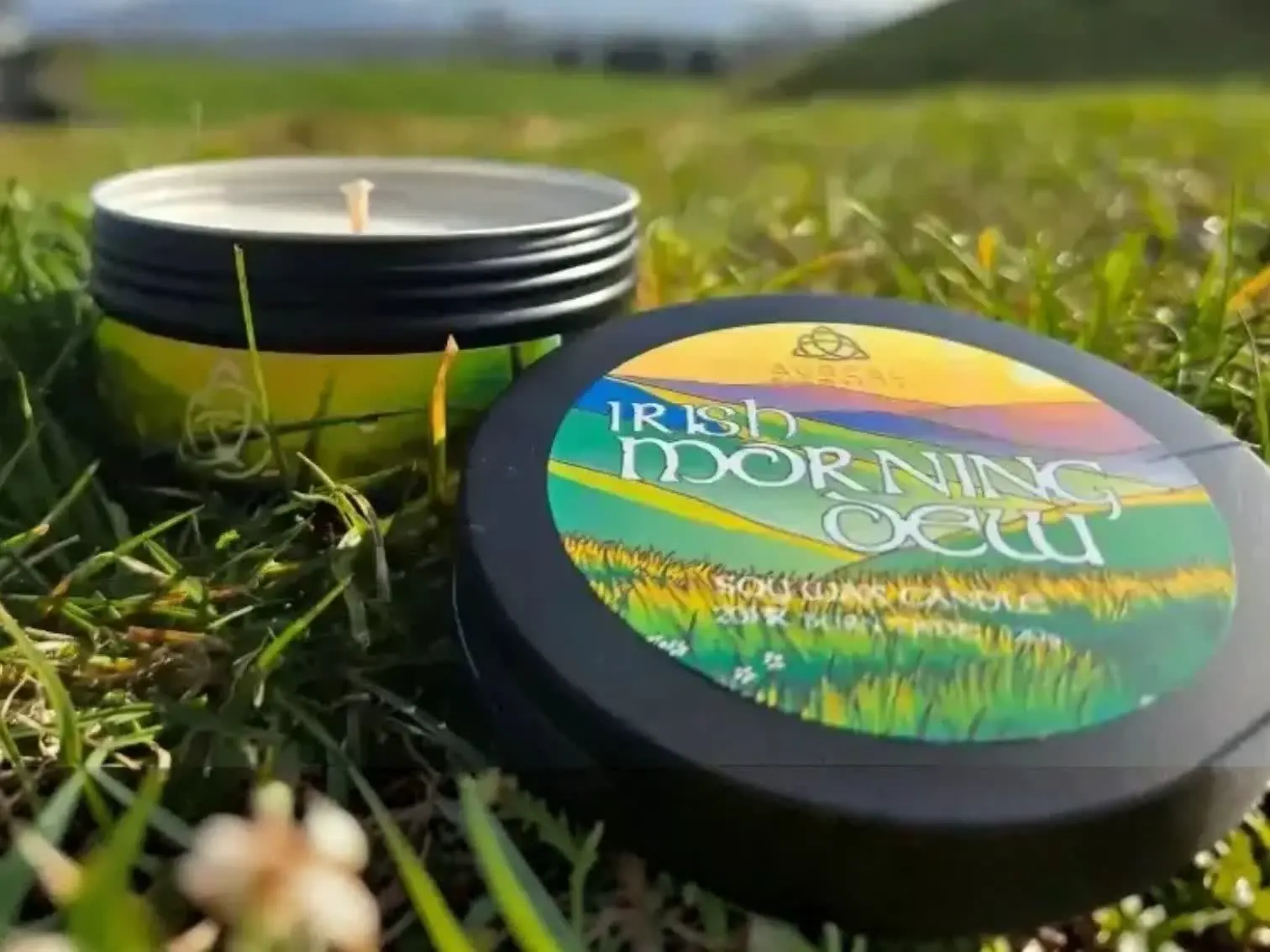
The Irish Turf Candle is a soy wax tin poured in South Armagh. It is scented for a turf fire. It is not tallow, and it is not meant to be.