How candles are made
A candle is wax and a wick. The rest is how you shape the wax, and how well the wick suits it.
Dipping
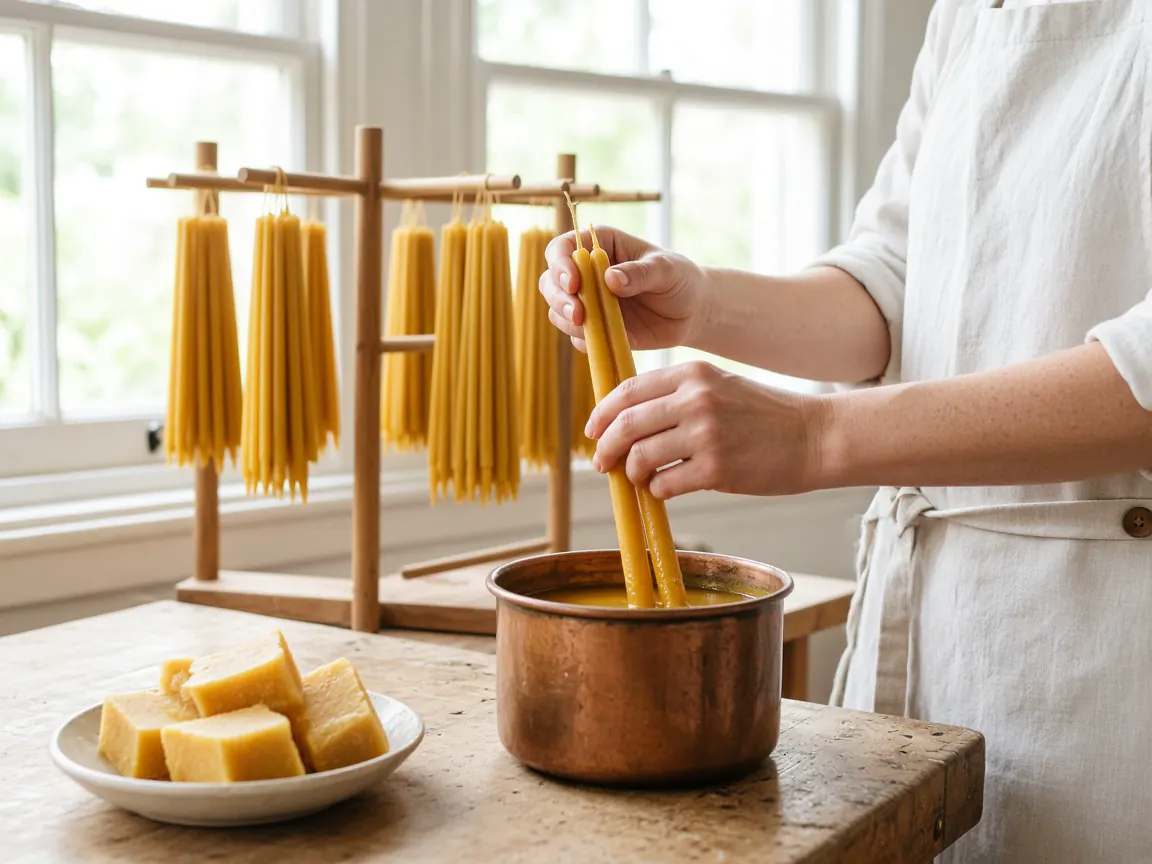
The oldest workshop method still in use is dipping. A straight wick is lowered into molten wax, lifted, and left to set. Each dip leaves a thin coat. You repeat until the candle is thick enough to burn for a useful time. It is slow, and the shape is made by the wax itself rather than by a mould.
Moulding
Pour the wax into a mould with the wick held in the centre. When it is cold, turn it out. Metal moulds meant a maker could produce a batch of matching candles, and moulding became the usual way to make a household candle.
Poured into a tin or a jar
A container candle never has to stand on its own. The wax is poured into the tin or glass that will hold it, with the wick kept centred while it cools. Soy wax, from soybeans, is often used for this.
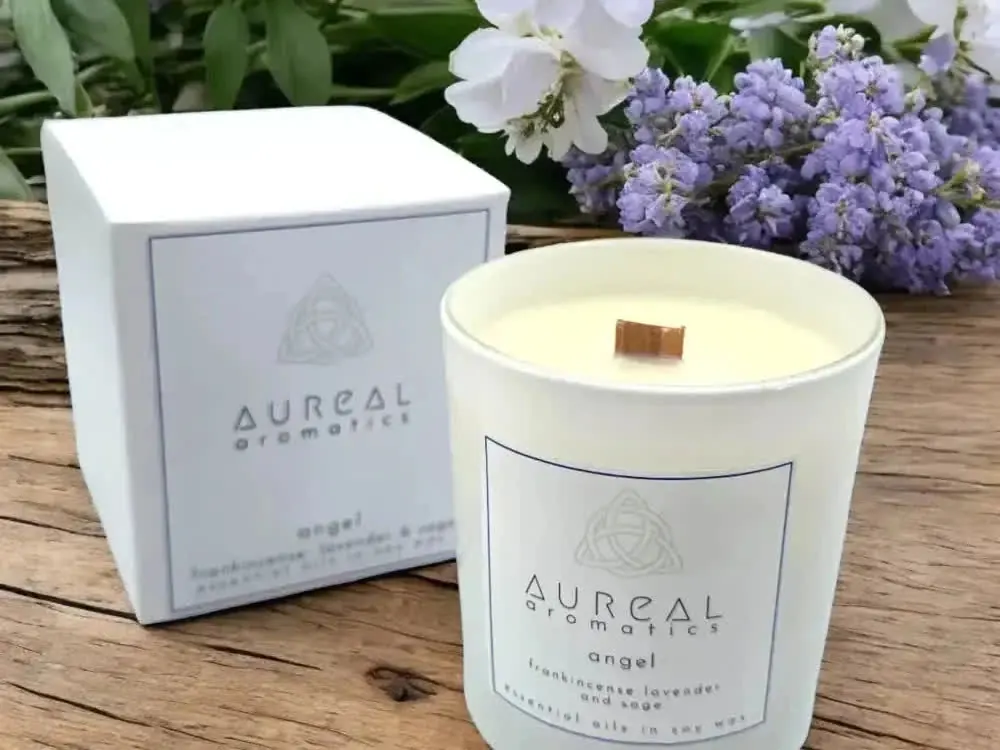
It is the method at Aureal Aromatics. The Irish scents are soy wax poured into tins, in the South Armagh workshop. The boxed candle is poured into a glass.
The wick
Most wicks are braided cotton. The braid is made so that, as it burns, the tip curls into the hottest part of the flame and is used up. The wick has to match the width of the pool of melted wax. A wick that is too heavy smokes. A wick that is too light leaves a wall of unmelted wax around the edge, which makers call tunnelling. Getting that match right is most of the craft.
Some container candles use a wooden wick instead. The boxed candle above is one of them. See the boxed candle for wax poured into glass, and the gift ideas for the poured tins.